
World Energy Inside
September 2016

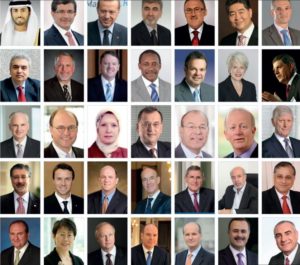
23rd World Energy Congress amazing opportunity for member committees to network with key energy players
23rd World Energy Congress opportune time to network with key energy players
With just under three weeks to go until the Congress, the World Energy Council programme team has confirmed that there are now more than 250 speakers from 81 countries, including 55 ministers and delegates from over 100 already registered. The 23rd World Energy Congress is an amazing opportunity for member committees to network and gain valuable insights from the many of the key players within the energy sector. There is still time to register. Delegates attending the event will hear from Guler Sabanci, the 7th most powerful woman in the World as well as CEOs and top executives from the world’s leading utility and power companies and global giants, including Gazprom, Saudi Aramco, BP, Royal Dutch Shell.
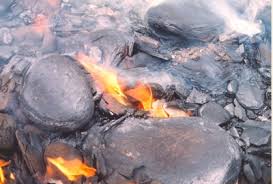
Global energy experts convene in Estonia for oil shale symposium
Global energy experts convene in Estonia for oil shale symposium
Organised by the Estonian member committee of the World Energy Council, the capital of Estonia will host on 20 and 21 September, high-level energy experts’ discussions about the current state of the oil shale industry, as well as its future opportunities. Oil shale is an energy resource that constitutes about 4% of Estonia’s gross domestic product. The oil shale industry in Estonia is one of the most developed in the world. Of all the oil shale fired power stations in the world, the two largest are in Estonia. The Oil Shale Symposium, being held in Tallinn for the fifth time, is dedicated to celebrating 100 years of oil shale mining in Estonia which is a momentous anniversary in oil shale development.
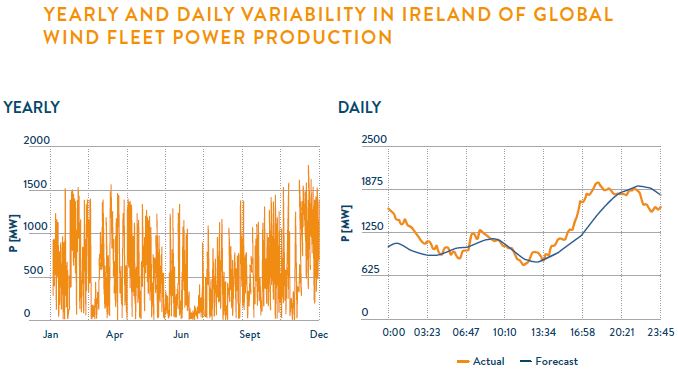
Variables renewables integration in electrical systems: How to get it right
Variables renewables integration in electrical systems: How to get it right
Renewables, including hydro, now account for over 30% of the total global installed power generation capacity and 23% of total global electricity production. In the past 10 years, wind and solar PV have witnessed an explosive average annual growth of 23% and 50% respectively, although their combined contribution to the global electricity supply is currently only 4%. A new report, ‘Variable Renewables Integration in Electricity Systems 2016 – How to get it right’, published by the World Energy Council in partnership with CESI S.p.A, draws upon 32 country case studies, representing about 90% of installed wind and solar capacity worldwide. The report launched on 20 September will inform the discussions at the 23rd World Energy Congress.
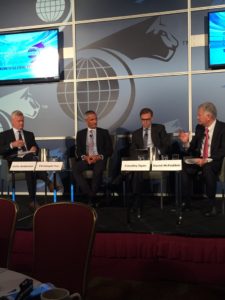
Canadian energy leaders discuss climate change policy at Energy Panel Breakfast
Canadian energy leaders discuss climate change policy at Energy Panel Breakfast
Canadian energy professionals gathered to hear the latest updates and insights on the design and implementation of emerging climate policies across the globe to achieve post-Paris GHG emission reduction targets, led by national and provincial governments and industry. The exclusive Energy Panel Breakfast organised by the World Energy Council’s Canadian member committee, sponsored by Siemens, was opened by the Honourable Glen Thiebault, Minister of Energy, Province of Ontario. Participants had a chance to hear from three of Canada’s energy leaders, as well as World Energy Council Secretary General, Dr Christoph Frei, during the panel discussion on September 13 at the Fairmont Royal York in Toronto.
Argentina launches sixth edition of the Knowledge Development Programme
Argentina launches sixth edition of the Knowledge Development Programme
Over the last two and half years, 500 professionals from more than 136 companies as well as public officials and journalists, have participated in the World Energy Council’s Knowledge Development Programme for Energy Leaders in Argentina. On August 11, the World Energy Council’s Argentinian member Committee successfully launched its sixth edition of the programme with the participation of 108 professionals. Participants also included professionals from across wider Latin America, such as Chile, Bolivia, Uruguay, as well as Argentinians working in Paris and Singapore who joined the course online.
Namibian member committee hold lecture to mobilise young professionals
Namibian member committee hold lecture to mobilise young professionals
Some of the brightest and the best young Namibian professionals and students convened in Windhoek to discuss how local resources could be made beneficial to the country’s population by establishing a fund geared towards ongoing research and capacity enhancement. The public lecture, organised by the World Energy Council’s Namibian member committee, was held on 11 August at the University of Namibia to mobilise and inform the student community and the public at large. It formed part of a wider awareness campaign to further promote the Council as a leading network of leaders promoting affordable and sustainable energy systems.
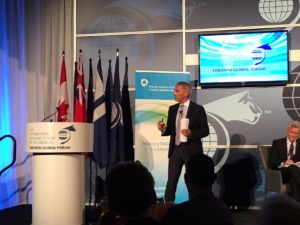
World Energy Council launches new resilience report at IEFA
World Energy Council launches new resilience report at IEFA
Emerging physical, financial and virtual risks pose an ever-greater threat to the security and supply of energy. A new World Energy Council report The Road to Resilience: Financing resilient energy infrastructure, launched at the IEFA Toronto Global Forum on 13 September by World Energy Council Secretary General, Christoph Frei, contends that energy systems must be smarter, not just stronger, to withstand diverse emerging risks and be more resilient. It focuses on three critical emerging risks – extreme weather events, energy-water-food nexus and cyber threats. It provides an overview of the Road to Resilience series developed in collaboration with project partners Swiss Re Corporate Solutions and Marsh & McLennan Companies.
Young Argentine energy leader to present award winning paper at congress
Young Argentine energy leader to present award winning paper at congress
Two papers being presented at the 23rd World Energy Congress in Istanbul next month by members of the World Energy Council’s Argentine Community of Energy Leaders, have been awarded 9th and 16th position within the top 20 papers submitted. Gastón Turturro, Argentine Energy Leaders Community member and author of the 9th award-winning paper, ‘Roadmap and Infrastructure Assessment to Introduce Electro Mobility in Buenos Aires City’, said: “The Congress will give us the opportunity to meet energy specialists related to the academic and business sectors from all around the world.

New cyber resilience report to launch at Energy Day in Berlin
New cyber resilience report to launch at Energy Day in Berlino
The World Energy Council will be launching the third report in the Road to Resilience series at the Energy Day organised by the German member committee in Berlin on 29 September. This report investigates how cyber risks can best be managed, taking into account the changing nature of the energy industry and energy infrastructure. Drawing on insights from a network of energy industry experts, the report assesses the ways in which vulnerabilities in current and new energy infrastructures are changing. The report also recommends several actions that energy decision makers and stakeholders can take individually and collaboratively to improve the sector’s response to rising cyber threats.
