
World Energy Inside
November 2016


Realising Africa’s potential at 23rd Congress
Realising Africa’s potential at 23rd Congress
With Africa’s rapidly growing population making ever increasing demands for greater energy access it is difficult to overestimate the scale of the challenge facing the continent. But it is also hard to match the sense of optimism and excitement that energy experts express about the opportunities to transform sub-Saharan Africa’s energy footprint in positive and sustainable ways. In this context, with Africa having an abundant potential for both conventional and renewable energy in the form of wind, hydro, and solar what should be done to secure Africa’s Energy Future. The World Energy Council dedicated the 4th day of the 23rd World Energy Congress to Africa. The main objective of the sessions on this day was to explore the critical drivers and innovations to secure a sustainable energy future for Africa.
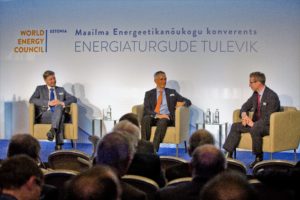
Future of Estonian and Nordic Energy markets
Future of Estonian and Nordic Energy markets
The World Energy Council and some of Estonia’s and Nordic key energy players convened to discuss what the future holds for global, European, and Estonian energy policy in the face of rapid innovation and other new realities facing the energy sector. Christoph Frei, Secretary General, World Energy Council, opened the conference with an overview of ‘The Grand Transition – Europe in the changing energy world’, and also joined Ando Leppiman, Undersecretary of Ministry of Economic Affairs, in a debate to explore ‘The grand transition of Estonian energy policy’. Key discussion points centred on energy challenges during the upcoming Estonian presidency in the EU in the second half of 2017, in the context of the World Energy ‘hard rock’ Scenario.
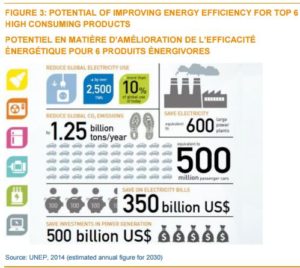
New energy efficiency policies report launched at COP22
New energy efficiency policies report launched at COP22
At an official UN side event held in the side-lines of the COP22 negotiations in Marrakesh, the World Energy Council has released a report highlighting significant achievements in energy efficiency despite the recent global economic crisis. Over the last 15 years’ energy efficiency improvements have saved the world 3.1 gigatonnes (Gtoe) of primary energy consumption and 7Gt of Co2, in 2014 equating to 23% of global energy consumption and 21% of global Co2 emissions in 2014. The report, ‘Energy Efficiency: A straight path towards energy sustainability’ conducted in collaboration with ADEME, does however reveal that the annual improvement rate of energy efficiency has slowed down from 1.6% between 2000 and 2008 to 1.3% from 2009 to 2014.F
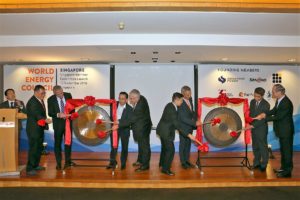
World Energy Council strengthens its presence in South East Asia
World Energy Council strengthens its presence in South East Asia
Leading power companies convened in Singapore to officially launch the new Singaporean member committee of the World Energy Council on 10 November. With Singapore setting ambitious goals to reduce energy emissions intensity and stabilise greenhouse gas emissions outlined in the COP21 accord agreed in Paris, the Council’s Singaporean member committee and its constituent organisations will play an important role in complementing public-sector efforts. The formation of the Council’s Singaporean member committee is timely, given the rapid transformation of the global energy industry due to the fast-paced development of new technologies, environmental challenges and changing consumer needs.
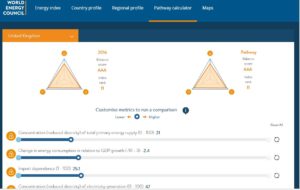
New 2016 Trilemma Index launched in Istanbul
New 2016 Trilemma Index launched in Istanbul
During the 23rd World Energy Congress, energy ministers and officials from Turkey, UAE, Algeria, South Korea, Ecuador, Nigeria, Switzerland, Portugal, Germany and more, convened to debate how best to achieve an AAA score to secure sustainable energy. Access to electricity and clean cooking has improved for the 125 Index countries to 85% and 74% respectively since 2000. At the same time cleaner forms of energy are being used for each dollar created, with CO2 intensity decreasing to 0.27tCo2/US$ in 2014, and the share of renewables in the global energy mix going up to 9.7% in 2015.This signals that countries are building more sustainable energy systems by concurrently addressing the three dimensions of the Energy Trilemma – energy security, energy equity and environmental sustainability – finds the recent Energy Trilemma Index report launched at Congress.
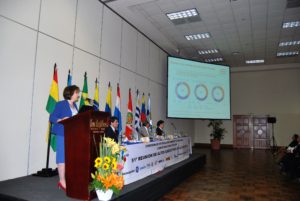
Bolivia is at the heart of regional integration
Bolivia is at the heart of regional integration
As Bolivia embarks in a series of generation projects that aim to consolidate the country as the centre of energy within Latin America, the Bolivian member committee of the World Energy Council held a workshop to explore the global panorama of the hydroelectric sector and its impact on Bolivia. From a global perspective, in the last 10 years the demand for electricity in the world has exploded exponentially as a result of economic and population growth and the economic growth in developing countries such as Bolivia where people now have more access to electricity. At the event, Reunion de Altos Ejecutivos at the Commission for regional electricity interconnection, Zulandi Van der Westhuizen, Deputy Director of World Energy Council Resources, explained: “Bolivia currently has more than 50% electricity generation based on fossil fuels…
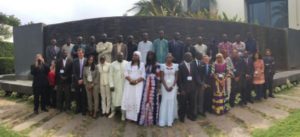
Africa Power initiative: best practises on renewable energy integration
Africa Power initiative: best practises on renewable energy integration
Senegal is actively pursuing reform policies in the energy sector with a strong focus on promoting renewable energy. Senegal aims to achieve the electrification rate of 50% in rural areas, 96% urban areas, and 70% of national level by 2017. Current energy policy is reflected in the “Lettre de Développement du Secteur de l’Energie”, a government strategy document building on lessons learned from previous energy policies over the period 2005-2012. The emphasis on renewable energy has resulted in the adoption of various legislatures such as the renewable energy law from 2010, which provides for a feed-in tariff. In this context, Senegalese agencies took part in a workshop conducted by the American member committee of the World Energy Council.
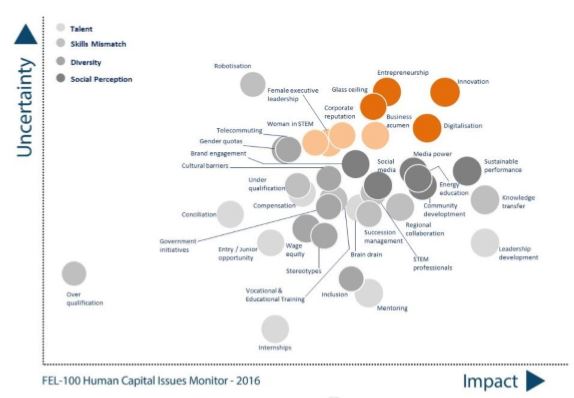
FEL-100 launch Human Capital report
FEL-100 launch Human Capital report
The energy sector is clearly facing a period of grand transition in the face of potent new challenges and innovative and disruptive technologies. With the continued drop in oil prices, fossil fuels will continue to supply more than three-quarters of world energy use in 2040 and natural gas is expected to grow the fastest, impacting on economies, companies, communities, and individuals. In order for the energy sector to manage these disruptions and deliver on future goals, invested capital must be optimally directed and efficiently managed.
World Energy Council brings 7 new energy realities to COP22 negotiations
World Energy Council brings 7 new energy realities to COP22 negotiations
As a UN accredited body since 1953, the World Energy Council is recognised as a reliable source of thought leadership and information to the United Nations Framework Convention on Climate Change (UNFCCC) process, negotiating teams and stakeholders. To keep the momentum of the World Energy Congress and the Council’s thought leadership on embracing the new energy frontiers, the World Energy Council brought the 7 new realities messages launched during our 2016 World Energy Congress to the 22nd Conference of the Parties (COP22) negotiations in Marrakesh. The World Energy Council focused the discussions on the Grand Energy Transition and what these new realities mean in a Post COP21 world. How can the energy sector contribute to the activation of innovative policies, technologies and business models that will secure a sustainable energy future?
Nominations for authors to contribute to special report by Intercontinental Panel on Climate Change (IPCC) report:
Calling all nominations for authors from the Council’s member committees to contribute to the special report by the IPCC on Global Warming of 1.5ºC. Nominations must be made to the country national focal point or observer organisations (or bureau members) and are due by 11 December. Please view:
List of focal points | List of observer organisations | The approved outline of the report is here | More on the nomination process here
Once nominations have closed, the respective bureau selects authors from the nomination lists. Nominations for authors of the methodology report 2019 Refinement of the 2006 IPCC Guidelines for National Greenhouse Gas Inventories are also open until 9 December.
